
Home / Countertops
The surface guide
A defining surface.
A considered choice.
A countertop can be the quiet foundation of a room or its strongest visual element. Compare appearance with daily care, fabrication details and the way the surface will be used.
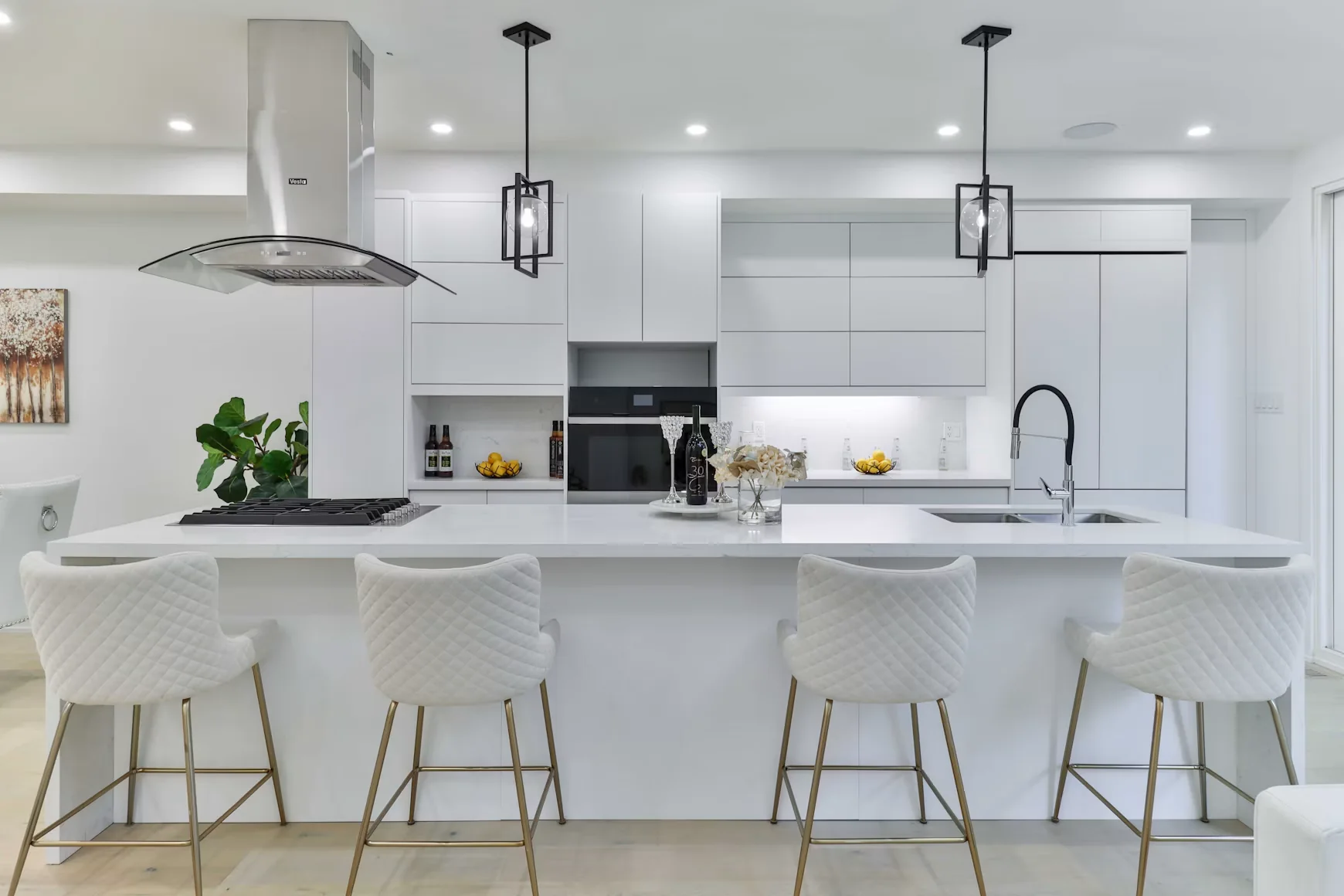
The material edit
A surface. A specific identity.
Explore engineered surface brands separately from natural stone. A trade name, a collection and a geological material are different things.
Engineered quartz · MSI
Q Quartz
Begin with Calacatta Laza or Calacatta Rivessa as named design references. Compare the full pattern with cabinet samples and review the current manufacturer specification.
- Calacatta Laza
- Calacatta Rivessa
Engineered surfaces · Cosentino
Silestone
Compare different visual directions within the Silestone range. Confirm the current composition, finish and dimensions for the selected color.
- Ethereal Glow
- Et Calacatta Gold
- Bohemian Flame
Engineered surfaces · LX Hausys
Viatera
Classic and Musica provide useful starting collections. Selected Viatera designs use NEOQ material; check the specification for each color.
- Classic — Snow White, Carrara Oro Evo
- Musica — Clarino, Minuet, Rococo
- Quartzite Collection — an engineered look, not natural quartzite
Natural stone
Granite
Use a stone name to begin the search, then choose the actual slab. Natural pattern, tone and movement vary. Supplier pricing levels are not strength grades.
- Black Pearl
- Colonial Cream
- Virginia Mist
- White Ice
Natural stone
Quartzite
A natural material distinct from engineered quartz. Review the particular slab, finish and care guidance, and confirm the material identification before selection.
Explore the source ↗Natural stone
Marble
A natural stone direction for expressive veining and a surface that can develop a patina. Discuss etching, staining and maintenance before committing.
Explore the source ↗Brand and material references are curated from Granite System’s published collections. They do not transfer Granite System pricing, services or affiliations to Lusso. Selection and availability must be confirmed for your project.
Look beyond the sample.
Small samples help establish color, but a larger surface changes how pattern and movement are perceived. Review the actual material and the details that will shape the finished installation.
01
Engineered quartz
Often chosen for a consistent palette and a wide range of patterns, engineered quartz is distinct from natural quartzite. Review the specific product’s care instructions, heat precautions and approved applications.
02
Natural stone
Granite, marble and quartzite differ in composition and behavior. Slabs can vary in color, veining and finish. Ask about the specific stone’s suitability, sealing and response to everyday spills rather than treating all stone as the same.
03
Porcelain & other surfaces
Thin-profile and large-format options can create a different visual language. Product thickness, edge construction, support and fabrication requirements deserve attention alongside the pattern. Confirm the intended application with the supplier.
Explore by material
Different surfaces.
Different considerations.
Compare the questions each material raises before narrowing your palette. These categories are educational, not a statement of inventory or brand availability.
Engineered quartz
Consider it for: a broad choice of manufactured patterns and repeatable design direction.
Ask about: the specific product’s heat guidance, cleaning requirements, edge options and suitability for your intended location. A material name is not a substitute for a product specification.
Granite
Consider it for: natural mineral character, from quiet speckling to more expressive movement.
Ask about: the actual slab, surface finish, sealing guidance and how its pattern will look across seams. Review the slab as a whole rather than relying only on a small sample.
Quartzite
Consider it for: natural variation and distinctive stone movement. It is a different material category from engineered quartz.
Ask about: correct stone identification, the proposed slab’s characteristics, finish care and fabrication details. Confirm suitability for your use with a knowledgeable stone professional.
Marble
Consider it for: a natural, expressive surface where the appearance of age and use is part of the design decision.
Ask about: etching, staining, finish options and your tolerance for visible change. Understand the care requirements before choosing it for a frequently used work surface.
To compare proposals, use the same layout, material, edge, sink details and backsplash scope. Ask what is included and what is separate; a square-foot figure alone may not describe the complete project.
Details make the surface feel complete.
An edge profile, backsplash transition and sink cutout all influence the final look. Decide whether the countertop should blend into the cabinetry or create contrast. Review seam placement and pattern direction before fabrication, especially with expressive veining.
From idea to clarity
A more useful
starting point.
Start with daily use
Consider cooking habits, cleaning preferences and tolerance for visible wear. Choose a surface you will be comfortable living with, not only one that photographs well.
Compare a complete selection
Bring cabinet, flooring and backsplash samples into the same light. View the countertop horizontally as well as vertically, and step back to judge the overall balance.
Confirm the fabrication plan
Review measurements, sink and faucet specifications, overhang support and edge details with the appropriate professionals. Final dimensions should be verified after the supporting elements are ready.
Good questions
A little more
clarity.
Are quartz and quartzite the same?
No. Engineered quartz is a manufactured surfacing product; quartzite is a natural stone. Product-specific performance and care should be checked for either option.
Can a photograph show the exact color?
Screens and lighting can change the appearance of a material. Use photographs to narrow a direction, then confirm with physical samples and, where appropriate, the actual slab.
Should the backsplash match the countertop?
It can, but it does not have to. Repeating a material creates continuity; a quieter complementary finish can let the countertop become the focal point. Consider the whole room before deciding.
Keep exploring